
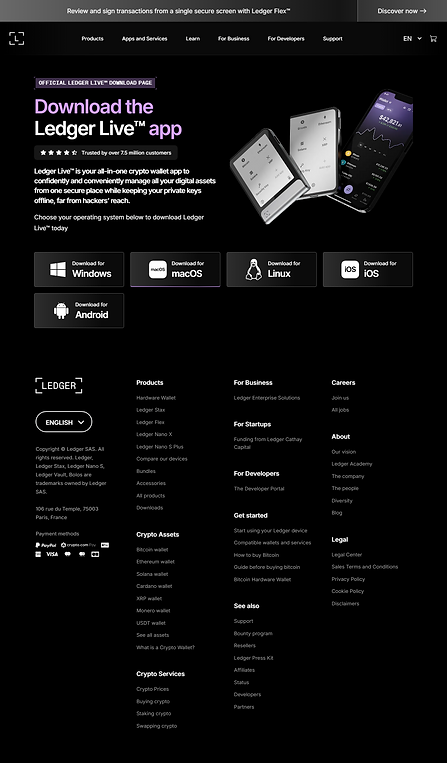
Ledger Login: Secure Access to Your Crypto with Ledger
When it comes to managing cryptocurrencies safely, Ledger has become one of the most trusted names in the industry. The company’s hardware wallets, combined with the Ledger Live app, allow users to store, send, receive, and grow their digital assets with top-notch security. One of the most common terms users search for is “Ledger login.” However, unlike traditional online accounts, Ledger does not use a typical username and password system. Instead, it uses hardware-based authentication, ensuring that your private keys never leave your device.
Understanding Ledger Login
When people talk about “Ledger login,” they usually mean accessing Ledger Live — the official app used to manage your Ledger hardware wallet. There is no online login portal or website where you can log in to your Ledger account with an email and password. Instead, all authentication happens locally through the Ledger device you own.
Ledger products are built around a self-custody model, which means you are the only one who controls your assets. Your crypto is not stored on Ledger servers. Instead, it remains on the blockchain, and your Ledger device securely holds the keys that let you access it. Therefore, “logging in” means connecting your Ledger hardware wallet to Ledger Live and confirming access through the physical device.
How Ledger Login Works
-
Download Ledger Live
To start, visit the official Ledger website (ledger.com) and download the Ledger Live application for your operating system — Windows, macOS, Linux, iOS, or Android. Always ensure you are downloading from the official source to avoid scams or phishing websites. -
Install and Open the App
Once installed, open Ledger Live. The app will guide you through the setup process if it’s your first time using it. You can choose to set up a new device or restore an existing wallet using your 24-word recovery phrase. -
Connect Your Ledger Device
Plug in your Ledger Nano S Plus or Ledger Nano X via USB (or Bluetooth for Nano X mobile users). The app will automatically detect the device and prompt you to enter your PIN code. Entering this PIN is effectively your “Ledger login.” It unlocks your hardware wallet so it can communicate securely with Ledger Live. -
Access Your Accounts
After entering the PIN, Ledger Live connects with your device, and you can view your portfolio, manage crypto accounts, send or receive funds, and even stake assets. No password or internet-based login is needed — all authentication is done through the physical device. -
Confirm Transactions Physically
Every transaction you initiate through Ledger Live must be physically confirmed on your Ledger hardware wallet. This extra layer of security prevents hackers from executing unauthorized transfers, even if your computer is infected.
The Importance of Secure Login
Ledger’s login process is intentionally designed to be offline-first. Because private keys are stored on the secure chip of your hardware wallet and never exposed to your computer or the internet, your assets are protected from phishing attacks, malware, and remote hacks.
Traditional logins that rely on passwords or email verification can be compromised, but Ledger’s system ensures that only someone with your physical device and PIN can access your funds. Even Ledger as a company does not have access to your wallet or your recovery phrase.
Common Login Issues and Solutions
-
Device Not Detected
-
Ensure your Ledger device is connected properly via USB or Bluetooth.
-
Try a different cable or port.
-
Make sure Ledger Live is updated to the latest version.
-
Restart both the app and your device if necessary.
-
-
Wrong PIN Code
-
If you forget your PIN, you can reset your Ledger device and restore it using your 24-word recovery phrase.
-
After three incorrect attempts, the device will automatically reset for security reasons.
-
-
Ledger Live Not Syncing
-
Check your internet connection.
-
Update the firmware on your Ledger device.
-
Clear cache data in the Ledger Live settings and reconnect.
-
-
Phishing or Fake Websites
-
Never try to “log in” on a website claiming to be Ledger Live.
-
The official app can only be downloaded from ledger.com or verified app stores.
-
Security Tips for Safe Ledger Login
-
Always verify the official URL. The real website is ledger.com. Fake sites often mimic it to steal your recovery phrase.
-
Never share your 24-word recovery phrase. Ledger will never ask for it through email, phone, or chat.
-
Use only the Ledger Live app for managing your crypto; don’t enter wallet data into other apps or browsers.
-
Keep your firmware and Ledger Live app up to date to ensure the latest security fixes.
-
Lock your Ledger device when not in use, and store it safely offline.
-
Write your recovery phrase on paper and store it in a secure place (not digitally).
What Ledger Login Is Not
It’s important to clarify that there is no Ledger Live web login or Ledger online account. You cannot sign in through a web browser like you would with an exchange or wallet such as Coinbase or MetaMask. If you find a website that asks you to “log in” to Ledger Live by entering your recovery phrase or connecting your wallet, it is a scam. Ledger will never request your seed phrase or credentials on any website.
Your Ledger hardware wallet and recovery phrase are the only ways to access your funds. The device itself acts as the key, and connecting it through Ledger Live is your only legitimate “login” method.
Why Ledger’s Login Method Is the Safest
Ledger’s login process eliminates traditional password-based vulnerabilities. Since authentication happens through physical confirmation, hackers cannot log into your wallet remotely. Your private keys stay isolated inside a secure element chip, the same technology used in passports and credit cards. This design has made Ledger devices a standard in crypto security.
Even if your computer is infected or your Ledger Live app is compromised, your assets remain safe because transactions must be approved directly on your Ledger device’s screen. This security-by-design approach makes Ledger’s login system one of the safest in the crypto world.
Conclusion
“Ledger login” doesn’t mean signing into an online account — it means securely connecting your Ledger hardware wallet to the Ledger Live app. By using your physical device, entering your PIN, and confirming actions manually, you ensure that only you can access and control your cryptocurrency.
This hardware-based authentication model is what separates Ledger from online wallets and exchanges. It gives users true ownership and control over their digital assets. Whether you are managing Bitcoin, Ethereum, NFTs, or staking coins, Ledger’s login process ensures that your crypto stays protected, private, and completely in your hands.